Omnia Health: AI-Enabled & HIPAA-Compliant Healthcare Management Platform Implementation Case Study
Valere partnered with Omnia Health to build an enterprise-grade, HIPAA-compliant healthcare management platform on AWS, achieving an 80-90% reduction in administrative tasks and zero PHI breaches since launch.
At a Glance
Overview
Omnia Health partnered with Valere to build an AI-enabled, HIPAA-compliant healthcare management platform from scratch to centralize operations between Health Plan Administrators, Medical Service Organizations, clinical staff, and patients. The platform was designed to handle sensitive patient data while enabling real-time communication and AI-powered insights for Medicare Advantage and managed care organizations.
Company
Omnia Health
Location
Miami, Florida, United States
Industry
Healthcare Technology / Care Management
Primary Service
A HIPAA-compliant, AI-powered cloud platform that connects HPAs, MSOs, clinicians, and patients
The Challenge
Omnia Health needed a comprehensive platform to manage healthcare workflows, specifically for Health Plan Administrators (HPAs) and clinical staff. The challenge included centralized management of user roles, real-time communication, secure patient data management, and the need for a robust notification and reporting system. Without an integrated solution, manual workflows were prone to inefficiencies, errors, and slow data processing, which affected patient care and administrative operations. Ensuring compliance with healthcare regulations (such as HIPAA) was a critical requirement.
Solution Implemented
Valere engineered a secure AWS infrastructure using private subnets, auto-scaling, and comprehensive encryption to isolate patient data. The solution features an AI-enabled clinical data extraction system with 92% accuracy, a real-time dashboard with sub-3-second load times, and a 99% reliable notification system. The complete system was delivered in a phased five-month timeline, covering discovery, architecture, and validation testing.
About the Company
Mission
Omnia Health enhances managed care delivery for at-risk populations by providing a unified platform that eliminates data fragmentation and automates critical administrative workflows. The company focuses on connecting the complex ecosystem of payers, providers, and patients to improve care coordination and cost containment through secure technology.
The Challenge: Developing a HIPAA-Compliant Healthcare Platform to solve manual administrative bottlenecks
Healthcare care management faces unique challenges compared to other industries. Beyond typical technical requirements, healthcare platforms must navigate stringent regulatory compliance (HIPAA, HITECH Act). Omnia handles extremely sensitive protected health information, integrates with legacy EHR systems and payer data feeds, and must maintain 99.9%+ uptime for clinical operations. Their Founding CTO, explained,
"We needed enterprise-grade security and HIPAA compliance without enterprise-level DevOps staff. Traditional approaches would have taken 12-18 months and 3-5x our budget."
Technical Constraints
Fragmented Data Streams: The platform needed to ingest and process data from diverse sources, including payer flat files, provider EHR systems, and patient inputs, each with different formats and security requirements.
Scalability Without Operational Burden: As a small startup, Omnia could not afford a large DevOps team; the system needed to scale automatically as new clinics were onboarded.
Market/Business Impact
Budget and Timeline Barriers: Traditional approaches would have taken 12-18 months and cost 3-5x the available budget, delaying market entry and burning through startup capital.
Communication Inefficiency: Relying on email for time-sensitive clinical workflows was insufficient, leading to slow processing that affected patient care.
Compliance/Security
Regulatory Complexity: The platform had to strictly adhere to HIPAA technical safeguards, including encryption at rest and in transit, audit logging, and role-based access controls. Non-compliance represented a significant legal liability and business risk.
Why Omnia Health Partnered with Valere for their AI Transformation
Eduardo Diaz (Founding CTO) envisioned an enterprise-grade platform that could bypass the traditional 12-18 month development cycle and high costs of traditional DevOps. He required a partner with deep AWS expertise to build a solid foundation that allowed his small team to focus on healthcare-specific features rather than infrastructure management.
Eduardo Diaz selected Valere after evaluating multiple vendors, identifying several key differentiators:
Technical Depth in AWS Healthcare Infrastructure: Valere demonstrated specific expertise in translating HIPAA requirements into architectural decisions like VPC design and audit logging, rather than just offering general cloud knowledge.
Honest Assessment and Prioritization: Valere set realistic expectations regarding scope and timelines, helping Omnia prioritize features that delivered the most value for their initial launch.
Strategic Engineering Approach: Valere treated HIPAA compliance as a practical engineering challenge rather than a checkbox exercise, ensuring security was built into the foundation from day one.
"Valere has been the kind of long-term partner we were hoping to find, technically strong, responsive, and genuinely committed to our success. They delivered a HIPAA-compliant, enterprise-grade platform in 5 months that measurably improved our operations."
The Solution: Engineering an AI-Powered Enterprise-Grade, HIPAA-compliant Healthcare Management Platform on AWS that Centralizes Operations
Valere designed and implemented a comprehensive healthcare management platform built on AWS with security as the foundation.
Infrastructure Architecture
The team built a multi-tier AWS infrastructure using VPC with public and private subnets to isolate patient data workloads from direct internet exposure. All systems handling electronic Protected Health Information operate in private subnets accessible only through controlled entry points.
For compute resources, Valere deployed Elastic Beanstalk with auto-scaling configured to handle between 1 and 10 EC2 instances based on demand. An Application Load Balancer distributes traffic across instances while CloudFront CDN delivers the React frontend globally with edge caching.
Database architecture centered on MongoDB Atlas M10 dedicated cluster connected via AWS PrivateLink, ensuring the database never touches the public internet. This private endpoint connection was critical for meeting HIPAA’s technical safeguard requirements.
Security Implementation
Security was architected in layers rather than bolted on afterward. AWS KMS handles encryption key management for all data at rest, including S3 buckets and database connections. All credentials live in AWS Secrets Manager with automatic rotation capabilities, eliminating the risk of hardcoded API keys or passwords in code.
CloudTrail provides comprehensive audit logging of every API call, access attempt, and configuration change. Combined with CloudWatch alarms, the team built real-time visibility into security events and performance issues. When a customer or regulator asks who accessed a patient record, Omnia can provide a complete audit trail within minutes.
Security Groups enforce least-privilege access policies throughout the infrastructure. A Bastion Host provides secure administrative access to private resources when needed, while NAT Gateway enables secure outbound internet access from private subnets.
Platform Features
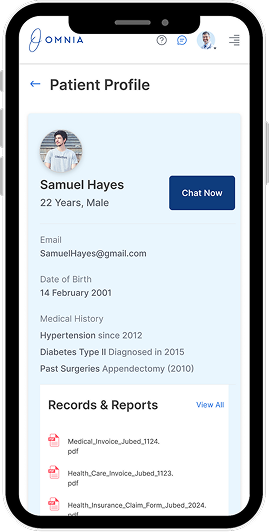
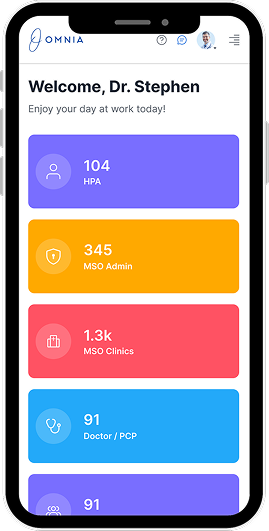
The core platform includes hierarchical user management supporting four distinct roles: Health Plan Administrators, MSO Admins, Clinical Staff, and Patients. Each role has tailored dashboards and permissions appropriate to their responsibilities.
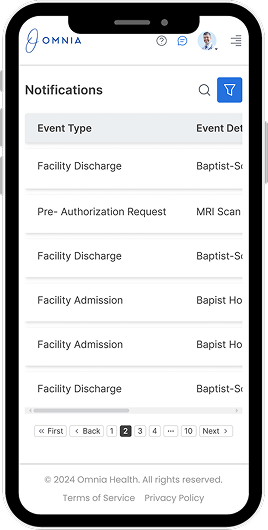
An event-driven notification system ensures critical healthcare events reach stakeholders reliably. When a patient needs appointment approval or a follow-up is required, relevant parties receive notifications immediately rather than discovering issues hours or days later.
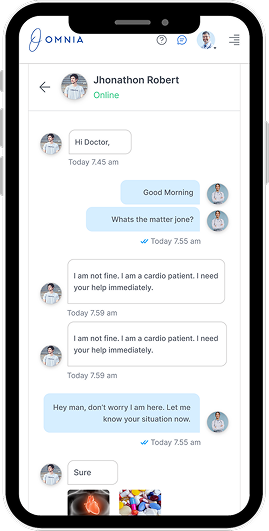
Secure, encrypted messaging enables bidirectional communication between all user types while meeting HIPAA transmission security requirements. Clinical staff can coordinate with patients and administrators without reverting to insecure channels like regular email.
AI Capabilities
Valere integrated AI-enabled patient insights and clinical summaries that pull data from multiple sources and generate actionable information. The AI components achieve 92% accuracy for clinical data extraction, providing reliability suitable for healthcare decision support.
The AI infrastructure runs on the same AWS compute environment, handling machine learning inference workloads without performance degradation to the main application.
Development Workflow
The team implemented a CI/CD pipeline with separate environments for Development, Staging, and User Acceptance Testing. Manual approval gates prevent accidental production deployments while maintaining deployment velocity. Infrastructure as code using Terraform made it straightforward to replicate environments and maintain consistency.
The Results
Valere delivered the MVP platform in five months from project kickoff to production launch. The timeline included architecture design, infrastructure provisioning, security hardening, application development, and comprehensive testing.
Key Outcomes
Efficiency & Scalability Gains:
80-90% reduction in manual administrative tasks.
60-70% reduction in account creation time.
Saved $200,000–$300,000 annually by avoiding the need for 2-3 full-time DevOps engineers.
Technical Performance:
99% delivery success rate for critical notifications.
Sub-3-second dashboard load times, even during peak usage.
Successfully handled a 5x traffic increase during clinic onboarding with zero downtime.
Security & Compliance:
Zero PHI breaches since launch.
100% audit trail coverage via CloudTrail.
Reduced insurance premiums due to a demonstrated secure posture.
Strategic Business Impact
The platform fundamentally changed how Omnia competes in the healthcare care management market.
Market Positioning
Demonstrating HIPAA compliance through AWS infrastructure accelerated customer acquisition. Prospective customers see evidence of security investment rather than just promises. The ability to provide detailed audit trails and explain security architecture builds trust faster than competitors without similar capabilities.
Capital Efficiency
By achieving enterprise-grade infrastructure at $235-800 monthly costs, Omnia preserved runway for product development and market expansion. Traditional infrastructure approaches would have consumed 3-5x more capital for equivalent capabilities.
Competitive Differentiation
AI capabilities enabled by AWS compute resources provide insights that manual processes can’t match. Clinical summaries with 92% accuracy give users actionable information without data compilation overhead, differentiating Omnia from platforms that still rely on manual reporting.
Operational Leverage
The infrastructure supports 10-100x growth without requiring platform rewrites. As Omnia scales from initial pilot customers to regional coverage, the same architecture accommodates expansion. This removes a significant scaling risk that often forces startups into expensive re-platforming projects.
Risk Mitigation
Zero PHI breaches since launch protects both regulatory compliance and customer trust. In healthcare, a single breach can destroy a young company’s reputation. The layered security approach provides insurance against this existential risk.
The Client’s Perspective
Beyond the initial statement, he detailed what made the partnership effective. The combination of technical depth and practical healthcare knowledge stood out. Valere didn’t just build what was requested but educated Omnia on HIPAA requirements, AWS best practices, and architectural decisions that would impact long-term operations.
On the technical side, Diaz appreciated that Valere recommended best practices Omnia hadn’t considered, particularly around HIPAA compliance and AWS security. The team anticipated regulatory concerns before they were raised and built security into the architecture from day one rather than retrofitting it later.
The healthcare domain expertise combined with deep AWS knowledge proved invaluable. Many vendors understand cloud infrastructure or healthcare compliance, but Valere understood both and how they intersect.
When asked about likelihood to recommend Valere, Diaz responded with a 10 out of 10 rating and noted that Omnia had already referred two colleagues in healthcare tech to the company.
"They didn't just build what we asked for, they educated us on HIPAA requirements, AWS best practices, and architectural decisions that would impact us long-term. We didn't have to become AWS experts ourselves—Valere knew the patterns for HIPAA-compliant architectures and implemented best practices from day one."